
A Huge Coin Stash Discovered by Construction Crew Under Pool Site in southwestern Germany has unveiled approximately 1,600 medieval coins, marking one of the region’s most significant hoards in recent decades. This extraordinary 14th-century find offers unprecedented insights into medieval economies, extensive trade networks, and Glottertal’s rich mining history.
Key Implications:
- This significant 14th-century hoard, valued at 150 sheep and featuring coins from across modern-day Germany, Switzerland, and France, offers unparalleled insights into medieval European economies, extensive trade routes, and the intricate silver trade in the Glottertal region.
- The discovery firmly establishes Glottertal as a pivotal medieval mining hub and a main settlement for miners, underscoring its historical importance for regional development and its contribution to the wealth of the dukes of Freiburg.
- The intentional concealment of this substantial treasure, likely during a period of unrest, provides a rare window into the societal wealth, economic vulnerabilities, and protective measures employed by affluent individuals or those integral to mining operations in the 14th century.
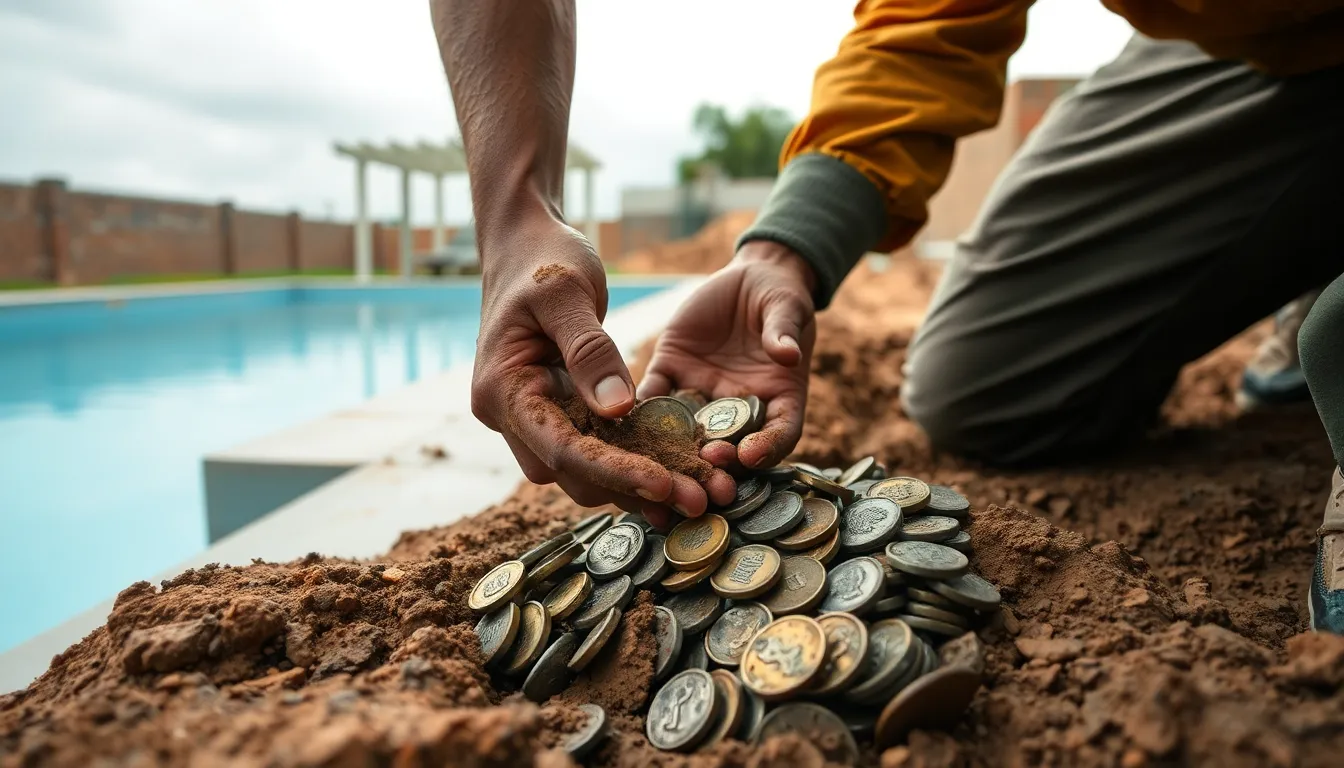
1,600 Medieval Coins Unearthed During German Pool Excavation
A construction project in southwestern Germany led to the unexpected recovery of approximately 1,600 medieval coins, marking one of the region’s most significant hoards in recent decades. This discovery occurred during routine work near a private swimming pool. Initial observations by a local resident described the find as ‘small metal plates’ before archaeologists confirmed their historical significance. This huge coin stash discovered by a construction crew under a pool site marks a major archaeological event.
Unexpected Recovery During Construction
The substantial coin hoard was uncovered during a construction project in Glottertal, southwestern Germany. Specifically, workers were laying underground pipes near a private swimming pool when the artifacts surfaced. This routine infrastructure task quickly transformed into an extraordinary archaeological excavation. The unexpected nature of the find underscores how historical treasures can lie hidden in plain sight.
Local resident Claus Völker was instrumental in alerting authorities to the potential discovery. His initial description of the items as ‘small metal plates’ quickly prompted a closer look. This keen observation proved critical in initiating the necessary archaeological investigation. Völker’s prompt action ensured the proper handling and preservation of the valuable artifacts.
The Magnitude of the Hoard
Approximately 1,600 medieval coins were discovered in total. This immense quantity immediately signaled the find as something truly remarkable. It is already noted as one of Germany’s largest coin hoards in recent decades. This makes the huge coin stash discovered by the construction crew under the pool site truly exceptional. The sheer volume alone highlights its profound historical impact and rarity.
The recovery effort unfolded over two challenging days. Approximately 1,000 coins were recovered on the first day of archaeological excavation. This initial phase was critical for securing the primary portion of the hoard and establishing a controlled dig site. Archaeologists worked meticulously to document each discovery.
An additional 600 coins were retrieved on the second day, despite knee-deep mud and heavy rainfall. These adverse weather conditions presented significant challenges for the archaeological team. Their dedication ensured that the remaining artifacts were carefully extracted and preserved. The persistent effort under difficult circumstances speaks to the importance of the find.
Archaeological Intervention and Historical Value
The sheer volume of 1,600 coins recovered over two days highlighted the magnitude of this rare archaeological event. It necessitated immediate archaeological intervention by the State Office for Monument Preservation. This swift response was crucial for safeguarding the historical context of the find. The office’s experts quickly took charge of the site, implementing specialized recovery protocols.
Archaeologists confirmed the historical significance of the coins shortly after their discovery. What appeared to be ‘small metal plates’ were in fact valuable medieval currency. This confirmation elevated the site from a construction zone to a vital historical study area. Each coin holds potential insights into past economies and cultures.
Such hoards provide invaluable data on medieval economies, trade routes, and societal wealth. They offer a tangible connection to the lives of people centuries ago. The coins can reveal patterns of commerce, political influence, and daily transactions. Each artifact contributes a piece to the larger historical puzzle, enriching our understanding of the period.
This significant discovery also serves as a reminder of the ongoing fascination with ancient numismatics and archaeology. Similar finds, such as the uncovering of a 1,400-year-old Byzantine treasure, continue to capture public interest. The study of a rare Ptolemaic gold drachma also demonstrates the unique historical narratives that individual coins can tell.
The huge coin stash discovered by the construction crew under the pool site will contribute significantly to understanding medieval German history. It offers a rare window into the past, providing concrete evidence of a vibrant historical period. This discovery remains one of Germany’s largest coin hoards in recent decades.

1320-Era Hoard Valued at 150 Sheep, 6X Greater Than Prior Regional Find
A construction crew undertaking a pool site excavation recently unearthed an astonishing medieval fortune, bringing to light a huge coin stash discovered by construction crew under pool site. This extraordinary find, with most coins minted around the year 1320, represents a significant historical discovery. Its estimated value dramatically surpasses other regional finds from the same period, offering invaluable insights into 14th-century economics and trade.
According to archaeologist Andreas Haasis-Berner, the newly discovered hoard possessed the purchasing power to acquire approximately 150 sheep in 1320. This metric provides a vivid illustration of the hoard’s immense wealth during the medieval era. It underscores the exceptional nature of this discovery when compared to similar archaeological endeavors in the region.
The Unprecedented Value of the 1320 Hoard
The true scale of this medieval treasure becomes apparent when contrasted with a comparable 2016 regional discovery. A find in a forest near Zurich in 2016 yielded over 200 coins, yet its total value was estimated at only about 25 sheep. This means the current huge coin stash boasts a value six times greater than the Zurich discovery, solidifying its place as a remarkably substantial find.
The estimated value of 150 sheep for the hoard is not merely a number; it signifies a considerable amount of money for its period. Such a substantial purchasing power strongly suggests that the treasure belonged to an individual of considerable wealth or status in the 14th century. This kind of financial capability would have been out of reach for the average person, hinting at a powerful or influential owner.
Unraveling Medieval Trade Networks Through Coin Origins
Beyond its sheer value, the newly discovered hoard offers a unique geographical snapshot of medieval European commerce. The diverse mints of origin for these coins paint a clear picture of an active and expansive trade network. While the majority of the coins were minted in Breisach, Zofingen, and Freiburg, others originated from Basel, St. Gallen, Zurich, Laufenburg, and Colmar.
These mints span areas of modern-day Germany, Switzerland, and France, indicating extensive interconnectedness. The presence of coins from such varied locations points to a well-established medieval trade network that facilitated the movement of goods and currency across significant distances. This geographical spread of coinage reveals how trade routes fostered economic prosperity and cultural exchange across the continent during the 14th century. Exploring other significant historical finds can also shed light on past economic structures, such as the unearthing of a 1400-year-old Byzantine treasure.
A Glimpse into 14th-Century Prosperity and Power
The dating of the coins predominantly to 1320 places this find firmly within the 14th century, a period of both significant challenges and burgeoning wealth in Europe. This specific timeframe allows archaeologists and historians to better understand the economic conditions and societal structures of the era. The sheer volume and value of this significant coin stash provide tangible evidence of the economic vitality present, at least for some, during this time.
The striking contrast between this hoard and other regional finds, particularly the 2016 discovery, further emphasizes its unique historical importance. It serves as a rare and invaluable artifact for studying medieval finance and the distribution of wealth. This unprecedented huge coin stash stands as a testament to the potentially immense fortunes that existed, providing a fascinating window into the lives of the medieval elite and the economic landscape they navigated.
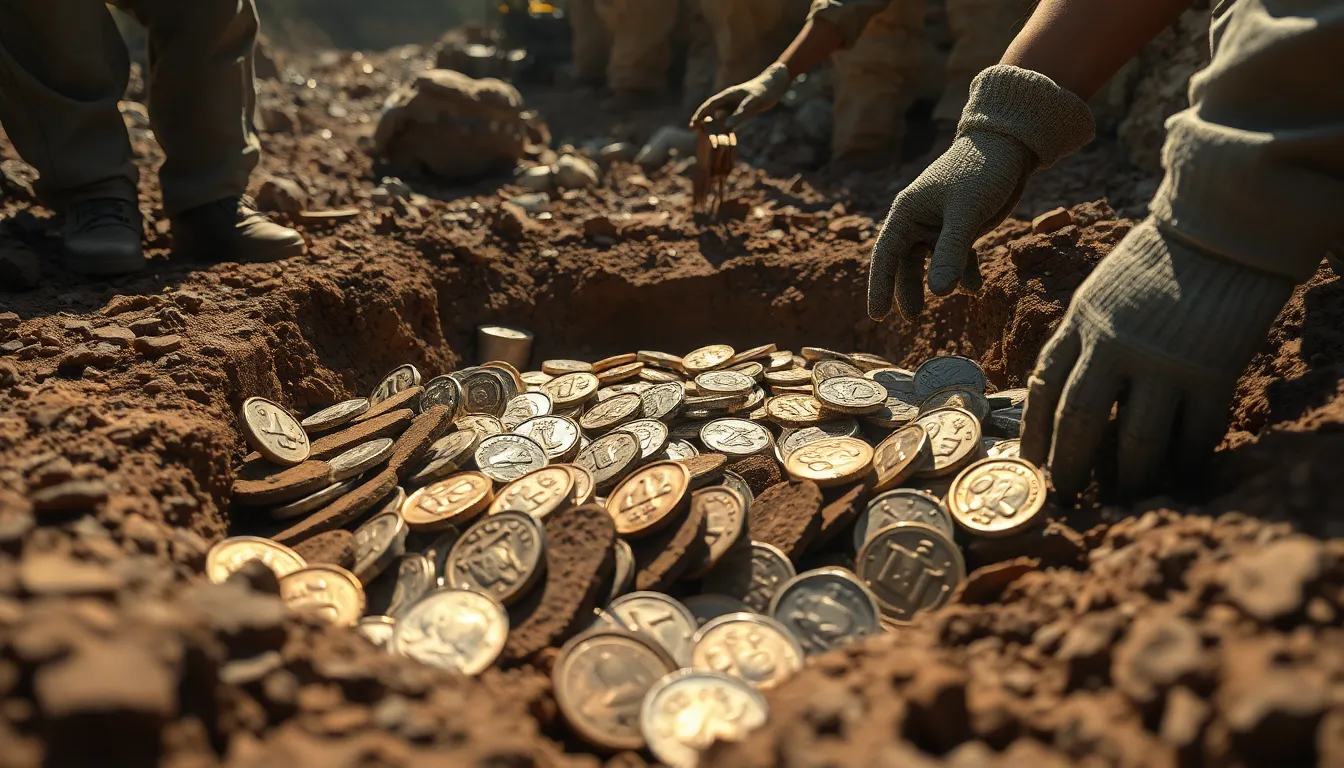
14th Century Finds Illuminate Glottertal’s Mining and Trade Networks
A recent archaeological triumph, the Huge Coin Stash Discovered by Construction Crew Under Pool Site, offers an unparalleled window into the 14th century. This pivotal discovery provides critical insights. It sheds light on 14th-century economic activity, the intricacies of silver trade, and historical mining operations within the Glottertal region. Experts are now evaluating this remarkable treasure. They anticipate it will enable definitive statements about coin circulation in Breisgau and illuminate minting activity during a dynamic historical period.
The evaluation of this significant find is poised to yield invaluable data. It will enhance our understanding of silver trade and historical mining practices in the Glottertal area during the early 1300s. Glottertal itself boasts a deep and storied mining history. The precise burial area for this coin hoard has been identified by researchers as a main settlement for miners. This strongly reinforces the archaeological significance of its location.
Economic and Trade Insights from the Glottertal Hoard
Unlocking the secrets of the 14th-century economy often hinges on discoveries like this coin hoard. The individual coins within the stash are expected to reveal complex patterns of commerce. They will detail the flow of currency and the economic priorities of the era. Understanding coin circulation in Breisgau, for instance, offers a direct metric for regional prosperity and interconnectedness. Analyzing the types and origins of these coins will also provide clear evidence of specific minting activity that shaped the financial landscape.
This find is particularly crucial for illustrating the scope of silver trade and its practical applications within the Glottertal region. During the early 1300s, silver was not merely a medium of exchange. It served as a primary driver of economic growth and political power. By examining the composition and provenance of the silver coinage, historians can reconstruct trade routes. They can also assess the economic influence of Glottertal’s mining output. This helps understand broader European economic networks extending to this region, much like other ancient treasure discoveries do.
Glottertal’s Historical Importance as a Mining Hub
Glottertal is far more than a scenic valley; it is a region steeped in a profound mining history. This history stretches back many centuries. The very identification of the burial area as a main settlement for miners underscores the critical role this community played. It was integral to the extractive industries of medieval Europe. Life in such settlements typically revolved around the arduous, often dangerous, work of extracting precious metals. This work profoundly shaped the daily routines and economic opportunities of its inhabitants.
The historical context firmly establishes Glottertal as a key mining site. It held particular importance for the powerful dukes of Freiburg. This strategic significance meant the region was a substantial economic asset. It fueled regional development and contributed significantly to the ducal treasury’s wealth. This specific historical detail lends considerable weight to the hypothesis. The newly discovered Huge Coin Stash Discovered by Construction Crew Under Pool Site likely belonged to someone directly involved in mining activities. This could have been a mine owner, a manager, or a highly skilled artisan within the industry. The profound connection between the land and its resources paints a vivid historical picture.
The Intrigue of the Buried Hoard: Unraveling Its Purpose
Experts have put forth compelling hypotheses regarding the intentional concealment of these coins. The leading theory suggests the trove was intentionally hidden during a period of unrest or political tension. Such times were fraught with uncertainty. This compelled individuals to safeguard their assets from raids, confiscation, or outright theft. Burying valuables was a common, if desperate, measure to secure one’s savings against external threats. These individual coins, like a rare Ptolemaic coin, each tell a story.
Several potential figures emerge as candidates for the owner of this hidden fortune. It could have been a miner, seeking to protect his hard-earned savings from volatile times. Alternatively, a soldier passing through, or even an affluent individual securing their life savings, might have entrusted the earth with their wealth. The deeply rooted historical context of Glottertal, however, strongly reinforces the idea. As a pivotal mining area, the stash most probably belonged to someone integral to mining operations. This aligns perfectly with the overall understanding of the region’s economy and its inhabitants during the 14th century.
Every single coin retrieved from this archaeological site adds a specific and invaluable piece to a much larger historical puzzle. These tiny metallic disks are not just currency. They serve as tangible links to the past. They help us understand the intricate economy, the expansive trade networks, and the complex political landscape of the early 14th century. The Huge Coin Stash Discovered by Construction Crew Under Pool Site will undoubtedly rewrite sections of regional history. It offers unprecedented detail on a crucial, transformative period.
Featured image generated using Flux AI
Live Science: “Hundreds of centuries-old coins unearthed in Germany likely belonged to wealthy 17th-century mayor”