
A series of audacious heists has recently exposed critical vulnerabilities across French cultural institutions, notably the “France: Museum robbery sees 2,000 gold and silver coins stolen” alongside an €88 million Louvre jewellery theft. These incidents, totaling over €96 million in irreplaceable artifacts, reveal widespread systemic security failures ranging from outdated physical defenses to sophisticated cyber-attacks.
Key Implications:
- Systemic Security Deficiencies: Multiple high-value robberies across France, including the €88 million Louvre heist and the Langres coin theft, expose pervasive security failures within cultural institutions, encompassing outdated CCTV systems, non-functional alarms, critical physical blind spots, and digital vulnerabilities.
- Evolving Criminal Sophistication: Perpetrators exhibit high levels of planning and adaptability, utilizing disguises, specialized tools, and strategic timing for physical breaches, alongside sophisticated cyber-attacks that disable modern security systems, underscoring the growing challenge posed by criminal enterprises.
- Urgent Security Overhauls: The diverse nature of these breaches, from direct physical entry to cyber-infiltration, necessitates immediate, multi-faceted security reforms for all French cultural institutions, including thorough audits, layered protective measures, technological upgrades, and enhanced inter-agency collaboration for both prevention and artifact recovery.
Louvre’s €88 Million Heist Driven by Critical Security System Failures
The world’s most visited museum, the Louvre, recently experienced a profound security breach resulting in a staggering loss. Eight historic French crown jewels, collectively valued at an astonishing €88 million, were stolen. This high-profile theft was not a random act but a direct consequence of multiple critical security infrastructure failures. These significant deficiencies included both an outdated CCTV system and a completely non-functional alarm system. Such widespread operational lapses left invaluable artifacts highly vulnerable to a determined criminal enterprise. The incident unequivocally highlights identifiable and addressable security weaknesses within the prestigious institution.
Systemic Security Lapses Uncovered
A preliminary investigative report exposed the pervasive nature of these systemic security failings within the museum. Perhaps the most alarming statistic revealed that one in three rooms in the Louvre lacked any CCTV coverage whatsoever. This created extensive blind spots, offering numerous unseen pathways for intruders. Even more critically, the single camera meant to monitor the specific exterior wall where thieves gained entry was severely mispositioned. It was pointed directly away from the first-floor balcony, which served as the crucial access point to the Gallery of Apollo.
Further exacerbating these visual surveillance shortcomings was the complete incapacitation of the museum’s overall alarm system. During the entirety of the brazen theft, the sophisticated alarms designed to detect and alert authorities to such a breach simply failed to activate. This comprehensive system failure allowed the perpetrators to operate undisturbed for a vital period. Such fundamental breakdowns in core security infrastructure represent a grave oversight in protecting globally significant national heritage. This notable museum robbery in France serves as a stark reminder of the absolute necessity for robust, up-to-date, and fully functional security protocols in high-value cultural environments.
These security deficiencies were not merely minor flaws but critical vulnerabilities. The lack of adequate CCTV coverage, coupled with a misplaced camera and a silent alarm, formed a perfect storm for the perpetrators. These were issues that could have been identified and rectified through routine audits and maintenance. The fact that they remained unaddressed points to a larger institutional failure in prioritizing asset protection at one of the world’s most treasured sites. This situation underscores the critical need for constant vigilance and technological upgrades in museum security, especially after a significant museum robbery in France.
Irreplaceable Treasures Lost
The eight specific items stolen from the Louvre constitute an irreparable cultural and historical loss. Their collective market value of €88 million, while substantial, barely scratches the surface of their true significance. These were not simply monetary assets; they were tangible pieces of French history, each with a unique narrative. Among the stolen items was a magnificent diamond and emerald necklace, originally a lavish gift from Emperor Napoleon to his beloved wife. This piece represents an intimate connection to a pivotal figure in European history.
Another item of immense historical import was a stunning tiara, famously worn by Empress Eugenie. As a prominent figure of the Second French Empire, Eugenie’s jewels embody an era of opulence and political power. Additionally, several other exquisite pieces previously owned by Queen Marie-Amelie were also taken. Each of these items carries immense historical weight, making their disappearance truly irreplaceable. They do more than adorn; they chronicle the lives, reigns, and cultural tastes of French royalty and nobility across centuries. The irreplaceable historical value of these jewels means their absence leaves an irreplaceable void in France’s national collection and cultural narrative.
The loss extends beyond monetary value, impacting scholarly research, public education, and national identity. These jewels offered direct connections to historical figures and epochs, providing invaluable insights into French heritage. Their absence diminishes the museum’s capacity to tell these stories authentically. Future generations will be deprived of experiencing these unique artifacts firsthand. Protecting such items requires a proactive and unyielding commitment to security excellence, a commitment seemingly absent during this high-stakes museum robbery.
A Methodical and Sophisticated Breach
The execution of the theft demonstrated a level of planning and criminal sophistication that was deeply alarming. The gang behind the heist meticulously orchestrated every aspect of their entry and extraction. They cleverly appeared disguised as workers, a tactic enabling them to blend seamlessly into the early morning operations of the museum. This disguise allowed them to bypass initial security checks without raising suspicion among staff. Crucially, they utilized specialized power-tools to circumvent physical barriers and gain access to secure areas.
Furthermore, a mechanical ladder was deployed, providing the means to access the first-floor Gallery of Apollo, a significant logistical feat in such a high-security environment. The timing of the breach was also strategically chosen. The thieves struck shortly after the museum opened on a Sunday. This specific window likely aimed to exploit moments of transition, reduced staff vigilance, or perhaps anticipated security shifts. The methodical nature of their approach—from their disguises and specialized equipment to their targeted entry point—points to extensive prior reconnaissance and professional planning.
Such a sophisticated breach into one of the world’s premier cultural institutions demands immediate and thorough reassessment of security protocols. The incident underscores that even the most renowned museums are not immune to determined and well-equipped criminals. It highlights the evolving challenges in museum security, requiring a blend of advanced technology, rigorous procedural adherence, and constant staff training. This methodical museum robbery serves as a critical case study for improving global heritage protection.
Over €96 Million Lost: Widespread Security Gaps Across French Cultural Institutions
France’s cultural institutions are grappling with a severe security crisis, marked by a recent surge in high-value robberies. These incidents have collectively resulted in the theft of over €96 million in stolen artifacts, revealing widespread and distinct security deficiencies nationwide. The total estimated value from just four major incidents alone surpasses this significant sum, highlighting the escalating challenges faced by museums and heritage sites across the country. This unprecedented wave of crime underscores a critical need for immediate and comprehensive security reforms.
Among these alarming thefts, the Louvre museum experienced a colossal €88 million loss of historic jewellery. This single event represents the largest financial hit in this recent series of crimes. Its sheer magnitude sent shockwaves through the global cultural heritage community. Paris’s Natural History Museum also suffered a significant blow, losing six rare gold nuggets valued at approximately €1.5 million. These items, often highly coveted by illicit collectors, represent irreplaceable parts of national heritage.
Further compounding the losses, the national porcelain museum in Limoges reported the theft of two highly valuable Chinese porcelain dishes and a vase. The estimated combined worth of these exquisite pieces is €6.55 million. Meanwhile, the Maison des Lumières in Langres was targeted in a robbery where approximately €90,000 worth of 2,000 gold and silver coins were stolen. This specific incident, often referred to as the “France: Museum robbery sees 2,000 gold and silver coins stolen,” underscores the diverse range of items vulnerable to theft, from ancient coinage to priceless jewelry.
Diverse Vulnerabilities Exposed Across Institutions
These distinct incidents highlight a troubling array of security vulnerabilities, impacting various types of museums and collections across France. The nature of the breaches has ranged significantly, from traditional physical break-ins to sophisticated cyber-attacks. This broad spectrum of methods points to a systemic failure in protective measures across different institutions, suggesting criminals are adapting their tactics to exploit any weakness.
For instance, both the Langres and Louvre heists involved direct physical breaches. Thieves forcibly gained entry, bypassing conventional security barriers through brute force or expertly planned incursions. Such incidents emphasize the need for robust physical deterrents, including reinforced entry points, advanced surveillance, and immediate response protocols. The vulnerability of physical infrastructure remains a critical concern, particularly for older, historically significant buildings housing priceless collections, where modern upgrades can be challenging to implement without affecting historical integrity.
In stark contrast, the Natural History Museum’s security and alarm systems were reportedly disabled by a cyber-attack. This sophisticated digital infiltration suggests thieves were aware of and expertly exploited these technological weaknesses. The successful cyber-attack on the Natural History Museum’s security systems spotlights the growing threat of cyber espionage. It highlights the necessity for advanced digital defenses for modern museum security systems. This incident also indicates a potential internal vulnerability or a highly skilled external threat actor targeting specific digital weak points. Securing digital infrastructure is now as crucial as physical fortifications.
Compounding the problem, the items stolen from the Limoges museum, estimated at €6.55 million, are still missing with no arrests made. Despite their high value and inherent traceability due to their unique nature, these prized artifacts have seemingly vanished without a trace. This highlights critical deficiencies not only in preventing theft but also in subsequent investigative and recovery efforts. The lack of arrests in such a high-profile case is particularly concerning, suggesting challenges in international cooperation or the sophistication of the criminal networks involved.
Urgent Need for Comprehensive Security Overhauls
The cumulative impact of these robberies extends far beyond their immediate monetary valuation. Each theft represents an irreplaceable loss to France’s rich cultural heritage, impacting generations to come. The varied nature of the attacks — from the physical intrusion at the Louvre and the Maison des Lumières where 2,000 historic coins were stolen, to the cyber-attack on the Natural History Museum — demands a profoundly multi-faceted approach to security enhancement. Relying on single-layer defenses, whether physical or digital, is no longer adequate to protect such valuable assets.
Authorities must address both the physical security of historical sites and the digital resilience of modern monitoring and alarm systems. The incidents underscore the urgent need for comprehensive security audits across all French cultural institutions, irrespective of their size or collection type. These audits should identify specific weak points and facilitate the implementation of tailored, layered solutions, moving beyond a generic, one-size-fits-all approach. Collaborative efforts between law enforcement, cybersecurity experts, cultural heritage specialists, and museum staff are paramount to developing robust protection strategies.
The continued absence of arrests and the failure to recover many of the stolen artifacts also raises significant questions about intelligence gathering, cross-border cooperation, and inter-agency coordination. For instance, the case of the France: Museum robbery sees 2,000 gold and silver coins stolen in Langres further exemplifies the difficulty in tracking and recovering smaller, yet historically significant, stolen items. Effective prevention and aggressive recovery strategies are absolutely essential to safeguard these invaluable treasures. Without immediate and significant reforms, France’s museums will remain susceptible to future, potentially more audacious, criminal enterprises, thus threatening the preservation of shared global history and cultural identity for future generations.
Targeted Coin Theft: €90,000 in Historic Currency Stolen from Langres Museum
A significant robbery recently impacted the Maison des Lumières, a museum located in Langres, north-eastern France. During the incident, an estimated 2,000 gold and silver coins were stolen, collectively valued at approximately €90,000. This brazen act was not a random theft; authorities believe the perpetrators specifically targeted these valuable historical artifacts due to their notable significance and unique provenance, highlighting a calculated and expert operation.
The incident, a profound loss for the city’s private collection, involved a meticulous selection of items. Officials have indicated that the coins were chosen with “great expertise,” suggesting the thieves possessed specific knowledge of numismatics or were acting on behalf of someone with such expertise. Such targeted thefts underscore the increasing demand for rare historical currency in illicit markets, making the recovery of these particular pieces challenging. This was a sophisticated operation where rare and historic coins often command high prices among collectors.
Details of the Audacious Heist
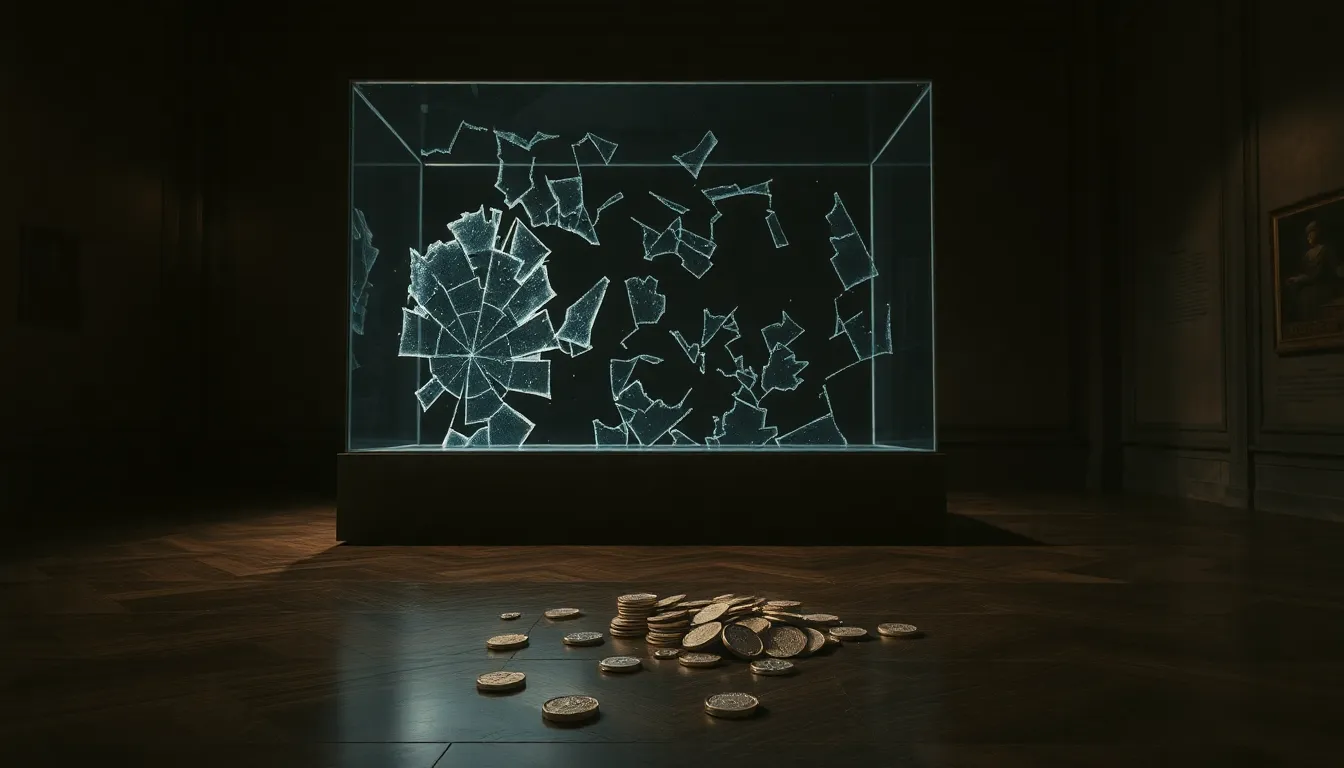
The robbery itself occurred on a Sunday night, exploiting a period when the museum was closed. The theft went unnoticed until Tuesday morning, when staff at the Maison des Lumières opened its doors and discovered a smashed display case. This delayed discovery provided the thieves with a critical window, allowing them ample time to escape and secure the stolen items, complicating immediate investigative efforts by local law enforcement.
The immediate scene indicated a forced entry and a deliberate focus on the coin collection. The destruction of the display case was a clear sign of the urgency and determination of the perpetrators to access the historical currency. Investigations are now underway to piece together the sequence of events and identify those responsible for the robbery that saw France: Museum robbery sees 2,000 gold and silver coins stolen from a public institution.
The Historical Value and Origins of the Stolen Collection
The stolen coins themselves possess considerable historical significance, dating back to a pivotal period in French history, specifically between 1790 and 1840. This era spans the French Revolution, the Napoleonic Wars, and the subsequent Bourbon Restoration, making these coins not just monetary items but tangible pieces of a tumultuous and transformative period. Their historical context significantly elevates their value beyond their intrinsic gold and silver content.
The story of these coins adds another layer to their importance. They were not always part of a museum display; their discovery is relatively recent. In 2011, during extensive renovation work at the very building that now houses the Maison des Lumières museum, these 2,000 coins were unearthed. This find transformed them into an invaluable part of the city’s heritage, carefully curated and displayed for public education and appreciation until the recent theft.
Market Implications and Recovery Challenges
The estimated total value of the stolen coins is approximately €90,000, equivalent to about £78,000 or $104,000. While this represents a substantial monetary figure, their historical and cultural worth is arguably much higher. The targeted nature of the theft, combined with the specific historical period of the coins, suggests they were stolen to fulfill a specific order or for sale on a clandestine market where such unique artifacts are highly prized.
Selling such a large quantity of historically significant coins, especially those dating from 1790 to 1840, without attracting attention will be difficult. Each coin likely carries unique markers or verifiable historical records, making them identifiable to experts and authorities. However, the illicit trade in antiquities often operates through complex networks, presenting significant challenges for recovery. The rising prices of precious metals, including gold and silver, also make such thefts attractive to criminals looking for both intrinsic metal value and historical premium.
The robbery serves as a stark reminder of the vulnerabilities faced by cultural institutions safeguarding priceless artifacts. Museums worldwide constantly battle against sophisticated criminals targeting high-value items. The Langres incident, where France: Museum robbery sees 2,000 gold and silver coins stolen, highlights the critical need for enhanced security measures and international cooperation to protect shared heritage. Furthermore, the broader market trends, where record gold prices influence demand for coins, may fuel such criminal activities, making vigilance essential for all cultural collections.
Featured image generated using Flux AI
Source: BBC Homepage: “France: Museum robbery sees 2,000 gold and silver coins stolen”